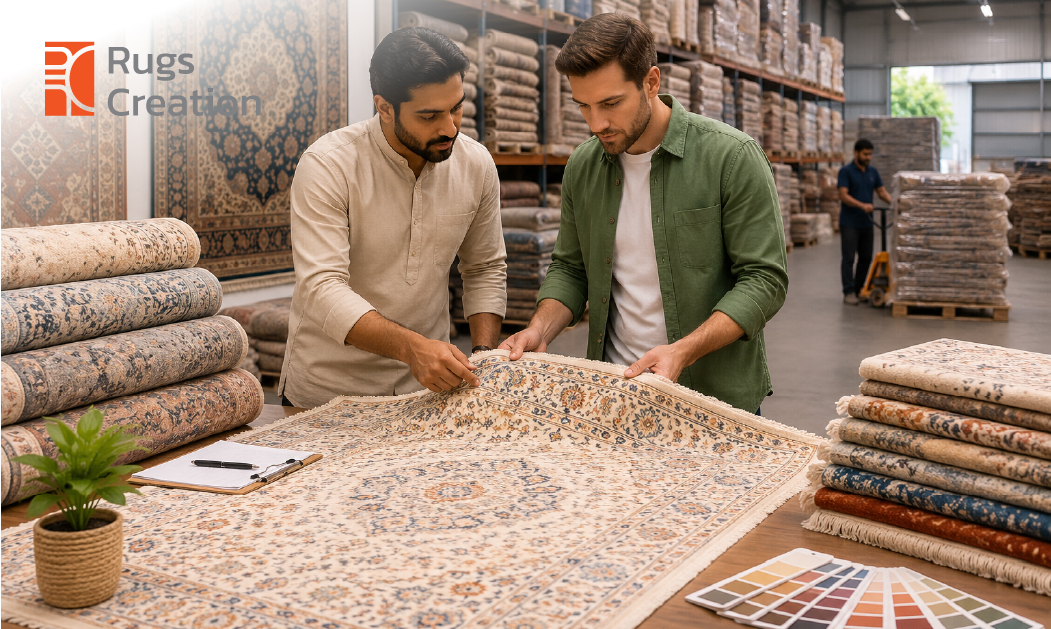
Indian Carpets vs Machine-Made Carpets is a comparison that many homeowners, retailers, and interior designers consider before making a purchase. While machine-made carpets offer affordability and mass production, handmade rugs continue to dominate the premium segment of the global market. Buyers looking for long-term value, craftsmanship, and unique designs often prefer handmade options over machine-produced alternatives.
The growing popularity of handmade rugs for home reflects a shift toward quality and authenticity. A handmade carpet is not just a floor covering; it is a piece of art created by skilled artisans using traditional techniques passed down through generations. This combination of heritage, craftsmanship, and durability makes handmade carpets a preferred choice worldwide.
Table of Contents
ToggleUnderstanding the Difference Between Handmade Indian Carpets vs Machine-Made Carpets
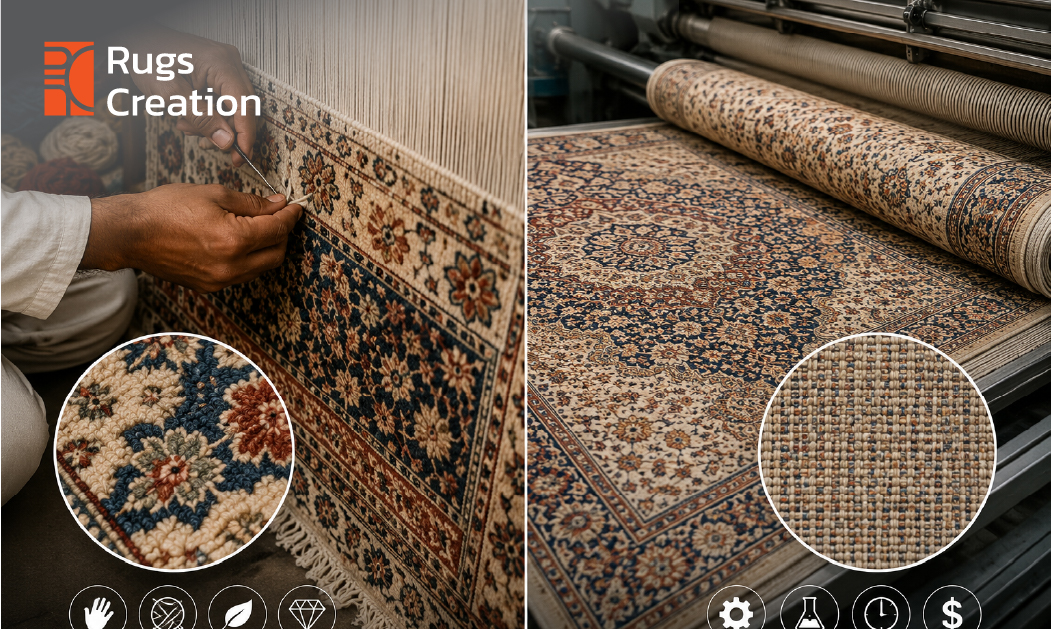
The primary difference between handmade and machine-made carpets lies in the manufacturing process. Machine-made carpets are produced using automated machinery, allowing manufacturers to create large quantities in a short period of time. While this process reduces costs, it often limits the uniqueness and detailing of the final product.
In contrast, a handmade carpet is crafted by skilled artisans who carefully weave each piece by hand. This process requires time, expertise, and attention to detail, resulting in a product that is distinctive and rich in character. When comparing Carpets vs Machine-made carpets, craftsmanship remains one of the biggest advantages of handmade products.
Superior Craftsmanship and Design
One of the key reasons buyers choose handmade rugs for home is their exceptional craftsmanship. Every handmade carpet reflects the skill and creativity of the artisan who creates it. Intricate patterns, unique color combinations, and detailed weaving techniques make each rug one of a kind.
Indian Carpets vs Machine-Made Carpets often follow standardized designs and patterns. While they may look attractive initially, they typically lack the depth and individuality found in handmade creations. For buyers seeking unique interior décor elements, handmade carpets provide unmatched artistic value.
Better Durability and Longevity
Durability is another important factor in the Carpets vs Machine comparison. Handmade carpets are generally more durable because they are crafted using high-quality materials and traditional weaving methods. With proper care, a handmade carpet can last for decades and even become a family heirloom.
Indian Carpets vs Machine-Made Carpets are designed for affordability and convenience, but they often wear out more quickly under heavy use. Many buyers choose handmade rugs for home because they offer better long-term value and require less frequent replacement.
Natural Materials and Premium Quality
Most handmade carpets are made from natural materials such as wool, cotton, silk, and jute. These materials provide superior comfort, durability, and visual appeal. A handmade carpet made from natural fibers also contributes to a healthier indoor environment by reducing the presence of synthetic materials.
Machine-made carpets often incorporate synthetic fibers to reduce production costs. While these materials can be practical, they may not offer the same level of comfort, texture, or durability as natural fibers. This is another reason why buyers continue to favor handmade rugs for home.
Sustainability and Ethical Production
Modern consumers are increasingly interested in sustainable and ethically produced products. Handmade carpets align well with these values because they support artisan communities and often use environmentally friendly materials.
When evaluating Indian Carpets vs Machine-Made Carpets from a sustainability perspective, handmade options generally have a lower environmental impact. The production process relies more on skilled craftsmanship and less on energy-intensive machinery, making handmade carpets a more eco-conscious choice.
Investment Value and Timeless Appeal
A handmade carpet is often viewed as an investment rather than a simple home décor item. Because of their craftsmanship, quality materials, and timeless designs, handmade carpets tend to retain their value over time.
Many buyers invest in handmade rugs for home because they enhance interior spaces while offering long-term durability. Unlike machine-made alternatives that may lose appeal after a few years, handmade carpets continue to add character and elegance for generations.
The debate between Indian Carpets vs Machine-Made Carpets ultimately comes down to quality, craftsmanship, and long-term value. While machine-made carpets offer affordability and accessibility, handmade carpets provide superior durability, artistic beauty, and unique character.
For homeowners, retailers, and interior designers seeking premium floor coverings, handmade rugs for home remain the preferred choice. A handmade carpet delivers a combination of tradition, quality, and timeless style that machine-made products simply cannot replicate.
FAQs
1. What is the main difference between handmade and machine-made carpets?
The main difference is the production method. Handmade carpets are crafted by skilled artisans, while machine-made carpets are produced using automated machinery.
2. Why do buyers prefer handmade rugs for home?
Buyers prefer handmade rugs for home because of their durability, unique designs, premium materials, and long-term value.
3. Are handmade carpets more durable than machine-made carpets?
Yes. A handmade carpet is typically more durable because it is made using high-quality materials and traditional weaving techniques.
4. Do handmade carpets use natural materials?
Most handmade carpets are made from natural fibers such as wool, cotton, silk, and jute, which enhance quality and comfort.
5. Are handmade carpets environmentally friendly?
Yes. Handmade carpets often have a lower environmental impact because they use sustainable materials and rely less on industrial machinery.
6. Is a handmade carpet worth the investment?
Absolutely. A handmade carpet offers exceptional craftsmanship, longevity, and timeless appeal, making it a valuable long-term investment.